

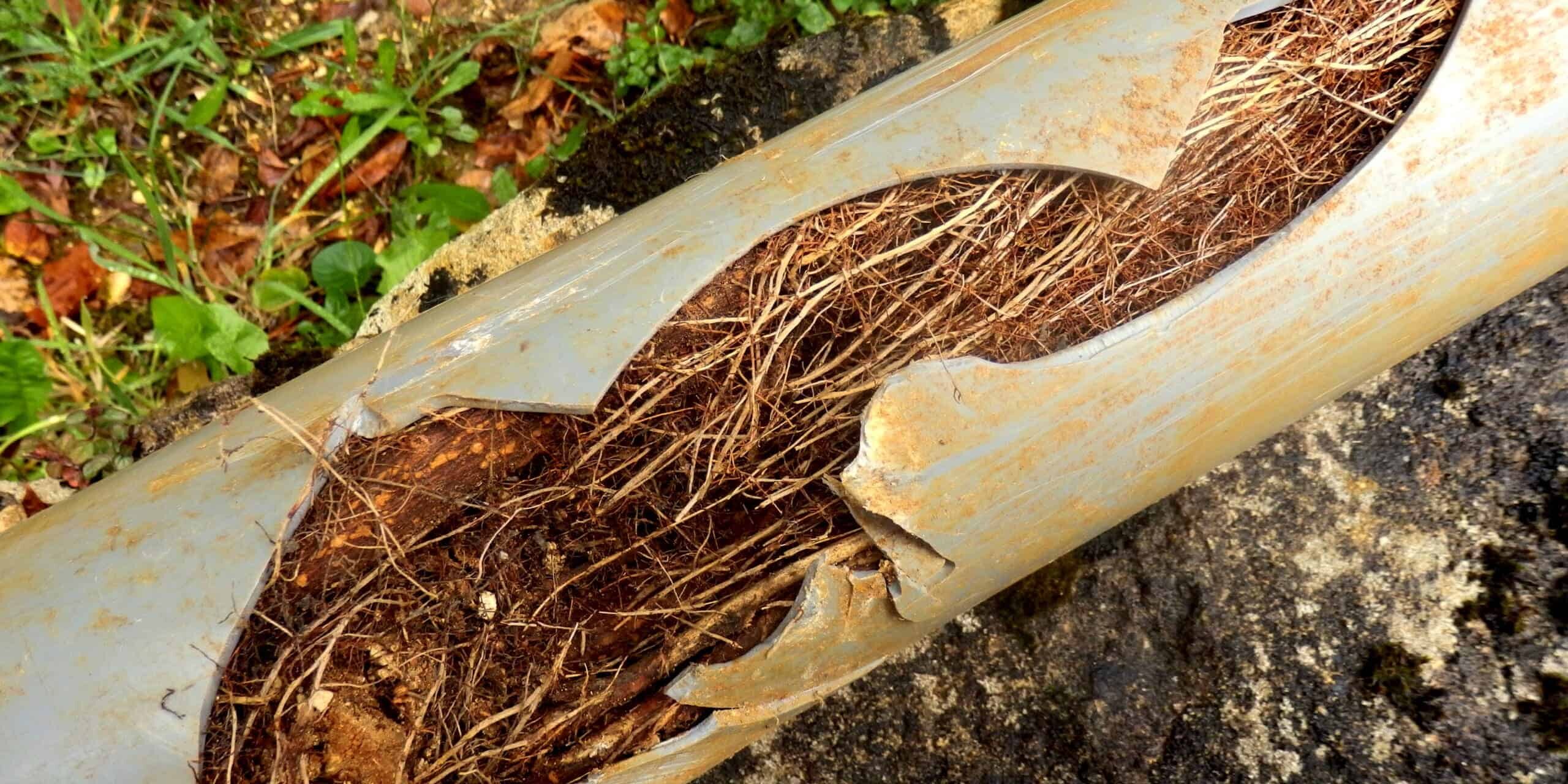
A slow drain is easy to brush off. So is a toilet that gurgles once in a while or a patch of grass that looks a little too green near the sewer line. But when tree roots get into a sewer pipe, those small warning signs can turn into a much bigger plumbing problem.
Tree roots are drawn to moisture, and a sewer line can become the perfect source if there is even a small crack, loose joint, or weakened section of pipe. Once roots find their way in, they continue growing inside the line. Over time, they can catch waste, slow the flow of water, create recurring clogs, and eventually damage the pipe enough to require sewer line repair.
The frustrating part is that most of this happens underground, where you cannot see it. By the time sewage backs up, drains slow throughout the house, or foul odors start showing up, the problem may already be more than a simple clog.
In this blog, we will explain what causes tree roots to grow into sewer lines, the kind of damage they can create, and the steps homeowners can take to prevent root intrusion or catch it before it turns into a costly repair.
How Tree Roots Find Their Way Into Sewer Lines
Roots do not break through a solid, intact pipe. They find existing weaknesses and grow through them.
Sewer lines are buried at the same depth where tree root systems are most active, and the warm, nutrient-rich water flowing through the pipe creates exactly the kind of environment roots are drawn to. When small cracks or loose joints allow water vapor to escape into the surrounding soil, nearby roots pick up that moisture trail and follow it to the source. Once a root reaches the opening, it enters the pipe and begins growing inside.
These entry points are almost always pre-existing. Pipe walls crack as they age, joints loosen as the soil around them shifts, and certain materials are far more vulnerable than others. Clay pipes, which were standard in homes built before the late 1980s, have more joints and develop cracks more easily over time. Cast iron corrodes from the outside in, creating surface deterioration that roots can work through. PVC holds up better because its joints fit more tightly, but even PVC can develop entry points if the installation was not done well or if ground movement has shifted the connections over the years.
Once a root makes it inside the pipe, the environment accelerates its growth. What begins as a single fine rootlet expands into a dense, fibrous mass that catches grease, toilet paper, and other debris passing through the line. Over time, that mass restricts flow, creates recurring blockages, and exerts enough pressure on the pipe walls to widen the very cracks that let the root in, which allows more roots to enter and the cycle to intensify.
The Warning Signs of Root Intrusion
Root intrusion develops gradually, which means the plumbing will show symptoms before the pipe reaches the point of failure. Catching these signs early is what keeps a manageable problem from becoming an emergency.
- Multiple drains are slowing down at the same time: A single slow drain is usually a local clog. When several fixtures throughout the house start draining sluggishly around the same time, the restriction is in the main sewer line, and root growth is one of the most common causes.
- Gurgling sounds from toilets or drains you are not using: Roots partially blocking the sewer line force air backward through the system. That displaced air creates gurgling or bubbling sounds at nearby fixtures, especially after flushing or running the washing machine.
- A rotten egg or sulfur smell near floor drains or in the yard: A compromised sewer line allows sewer gas to escape through cracks or backward through fixtures. The smell may come and go depending on temperature and water usage, but if it persists, the seal of the pipe has been broken.
- Sewage backing up, then clearing, then backing up again: This recurring cycle is one of the strongest indicators of root intrusion, specifically. Roots catch debris and create a blockage; the blockage gets pushed through or cleared, but the roots remain and begin catching debris again. The cycle repeats on a predictable timeline until the entry points are sealed.
- A patch of grass that stays greener or soggier than the rest of the lawn: Wastewater leaking from a cracked pipe fertilizes the soil above it. One strip of grass that is noticeably lusher than its surroundings, especially during dry conditions, often marks the path of a damaged sewer line.
What Root Intrusion Does to the Pipe Over Time
If root intrusion is not addressed, the damage progresses through a predictable sequence that starts small and compounds with each passing month.
It begins with partial flow restriction. The root mass inside the pipe narrows the available diameter, slowing drainage and producing the symptoms described above. At this stage, the pipe’s structure is usually still intact, and the roots can be removed without major repair work.
As the roots continue to grow, they begin exerting pressure on the pipe walls from the inside. Cracks that started as hairline fractures widen under that pressure, joints separate further, and the entry points that originally allowed the roots in become large enough to let more roots through. The blockages become more frequent, more severe, and harder to clear each time.
Eventually, the accumulated pressure and structural damage can cause sections of the pipe to crack apart or collapse entirely. At that point, clearing the roots alone is no longer enough because the pipe itself has been compromised, and sewer repair or full replacement becomes the necessary path.
The timeline for this progression varies depending on the pipe material, the tree species, the soil conditions, and how aggressively the roots are growing. But the direction is consistent: without intervention, the condition worsens steadily until the system forces the issue.
How Root Intrusion Is Diagnosed and Treated
The first step in any root intrusion situation is a sewer line camera inspection. A high-definition camera is fed through the pipe to show the interior condition in real time, revealing where the roots have entered, how extensive the growth is, how much of the pipe’s diameter has been compromised, and whether the pipe’s structure is still intact. Everything that follows is based on what that footage shows.
- Hydro-jetting uses high-pressure water to cut through root masses and scour the interior of the pipe clean. It is more thorough than mechanical snaking because it removes the full diameter of the buildup rather than just punching a channel through the center. For pipes that are structurally sound but experiencing active root growth, hydro-jetting clears the immediate problem and restores full flow.
- Trenchless pipe lining is the long-term solution for pipes with recurring root intrusion. A resin-coated liner is inserted into the pipe, inflated against the interior walls, and cured in place. The result is a smooth, seamless new pipe surface inside the original one that seals every crack, joint gap, and entry point permanently. Once the liner is in place, roots can no longer access the pipe’s interior, which breaks the cycle of repeated clearing and regrowth that keeps homeowners paying for the same problem.
- Section replacement or full line replacement becomes necessary when the pipe has collapsed, broken apart, or lost its structural integrity beyond what lining can address. Only the damaged sections are excavated and replaced when possible, keeping the scope as narrow as the damage allows.
How to Prevent Root Intrusion Before It Starts
Prevention is far less expensive than treatment, and a few practical steps can significantly reduce the risk of roots reaching your sewer line in the first place.
- Know where your sewer line runs: A plumber can map the path of your sewer line with a camera inspection or a locator. Knowing the route tells you which trees and shrubs are closest to the pipe and where to focus your prevention efforts.
- Be strategic about what you plant and where: Trees with aggressive root systems, including willows, poplars, silver maples, sycamores, and elms, should be planted at least 10 to 15 feet from the sewer line. Larger species with expansive root networks may need 20 feet or more. If you are adding new trees to the yard, choosing species with less aggressive root behavior near the pipe’s path reduces the risk considerably.
- Consider root barriers: Physical barriers made of plastic or metal sheeting can be installed vertically in the soil between a tree and the sewer line to redirect root growth downward and away from the pipe. Root barriers are most effective when installed before roots have reached the line, making them a strong preventive measure for homes with younger trees near the sewer path.
- Schedule regular camera inspections: For homes with mature trees near the sewer line, a camera inspection every two to three years catches root activity early, well before it causes a backup or damages the pipe. This is one of the simplest and most cost-effective maintenance investments a homeowner can make.
Do Not Wait for the Backup to Tell You What the Roots Already Know
Tree roots and sewer lines occupy the same underground space, and when the pipe gives roots an opening, the roots will take it. The damage builds invisibly, progresses steadily, and is significantly cheaper to address in its early stages than after the pipe has been compromised.
If your drains have been acting up, the same blockage keeps returning, or you have mature trees anywhere near the sewer line’s path, a camera inspection is the step that answers every question at once. It shows you what the pipe looks like inside and tells you exactly where you stand.
At Anytime Plumbing, Sewer, Drain & Heating, we diagnose and treat root intrusion with camera inspections, hydro-jetting, and trenchless pipelining that seals the pipe from the inside so roots cannot re-enter.
If you are dealing with recurring drain problems or want to find out whether roots are already inside your line, call us to schedule an inspection, and we will show you exactly what is going on before recommending anything.